名前を赤で表記しているメンバーは当研究室の学生・院生、青で表記しているメンバーは当研究室の教員です。
原著論文
- Azmi Alvian Gabriel, Tetsu Yonezawa
From Barrier Metrics to Cold-Chain Outcomes: A Performance-Based Qualification Framework for Bio-Based and Biodegradable Food-Packaging Films 【Review】
Trends in Food Science & Technology, in press.【Elsevier】(IF = 17.4)
【研究室内研究】
- Le-Chun Li, Chia-Ying Wu, Tsukasa Takanashi, Shih-Wen Tseng, Tetsu Yonezawa, Akira Yamakata, Chen-Hao Yeh, Ying-Chih Pu
Surface-Treated InP Quantum Dots for Selective CO2 Photoreduction
The Journal of Physical Chemistry Letters, in press.【ACS】(IF = 4.5)
DOI: 10.1021/acs.jpclett.6c02570(Published (web) 28 September 2026)
【国際共同研究】
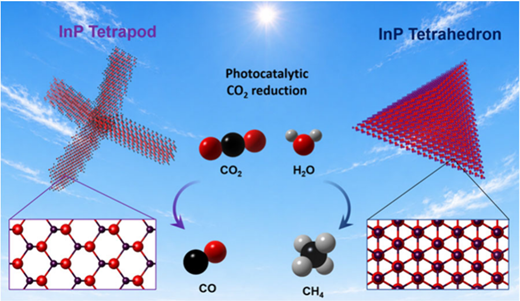 Abstract: Photocatalytic CO2 reduction over semiconductor quantum dots (QDs) offers a promising strategy for solar fuel production, yet the influence of surface atomic structure on reaction pathways and product selectivity remains poorly understood. Herein, surface-treated indium phosphide (InP) QDs with tetrapod and tetrahedral morphologies were synthesized through a temperature-controlled hot-injection method followed by hydrofluoric acid post-treatment. Removal of the native surface oxide layer effectively suppresses charge-carrier trapping and prolongs carrier lifetimes, resulting in significantly enhanced photocatalytic CO2 reduction activity. More importantly, the product selectivity is governed by the exposed crystal facets: (110)-oriented tetrapod preferentially produces CO through a two-electron pathway, whereas (111)-oriented tetrahedron promotes further hydrogenation toward CH4. This work establishes a direct structure–reactivity relationship between surface atomic arrangement and CO2 photoreduction selectivity, providing a design principle for environmentally benign QD photocatalysts for solar fuel production.
 - Wei-Han Lo, Kuan-Syun Wang, Yong-Yi Lo, Ren-Jei Chung, Tetsu Yonezawa, Ting-Yu Liu
SERS substrate of polyamide replicated Anodic Aluminum Oxide nanorod arrays for
uremic toxins detection
Spectrochimica Acta Part A: Molecular and Biomolecular Spectroscopy, 364 Part 1, 128516 (2027)【Elsevier】(IF = 4.8)
DOI: 10.1016/j.saa.2026.128516(Published (web) 29 July 2026)
【国際共同研究】
Abstract: Highly ordered gold-decorated polyamide nanorod (Au@PANR) arrays were fabricated as sensitive SERS substrates through a template-assisted transfer and covalent functionalization strategy. Polyamide nanorods (PANRs), replicated from anodic aluminum oxide (AAO) templates, were surface-activated via a single-step aqueous photodegradation process to introduce amine groups. Subsequent 1-ethyl-3-(3-dimethylaminopropyl)carbodiimide/N-hydroxysulfosuccinimide (EDC/NHS)-mediated coupling of 11-mercaptoundecanoic acid (MUA) enabled the high-density immobilization of gold nanoparticles (AuNPs) through robust Au-S linkages. FE-SEM characterization confirmed the formation of uniform PANRs with diameters of ∼70 nm and lengths of ∼600 nm, while XRD patterns verified the crystalline nature of the grafted AuNPs. Systematic optimization of the immersion time revealed that a 48-h incubation maximized the SERS enhancement. Using 4-mercaptobenzoic acid (4-MBA) as a probe, the Au@PANR substrate achieved a limit of detection (LOD) of 10−7 M with a relative standard deviation (RSD) of 6.85%, demonstrating exceptional sensitivity and reproducibility. These results highlight the potential of functionalized polymeric nanostructures for the trace detection of environmental toxins and clinical biomarkers.
- Kai-An Tsai, Xiang-Yu Yu, Yu-Chen Chen, Jui-Cheng Chang, Shihwen Tseng, Tetsu Yonezawa, Ying-Chih Pu
Balancing Surface Passivation and Charge Extraction in InP/ZnSe Core/Shell Quantum Dots for Photocatalytic Hydrogen Evolution
ACS Applied Nano Materials, 9(30), 14236-14250 (2026).【ACS】(IF = 5.8)
DOI: 10.1021/acsanm.6c01915(Publish (web) 22 July 2026)
【国際共同研究】

Abstract: Indium phosphide quantum dots (InP QDs) are promising low-toxicity photocatalysts; however, their hydrogen (H2) evolution performance is often limited by surface defects and inefficient charge-carrier utilization. Herein, green-emitting InP/ZnSe core/shell QDs with systematically varied ZnSe shell thicknesses at the monolayer (ML) level were synthesized to elucidate how shell growth regulates the structural, photophysical, and photocatalytic properties of InP-based QDs. Among all samples, InP/ZnSe-1.7, corresponding to a 1.7 ML ZnSe shell coating, exhibited the highest H2 evolution rate of 699 μmol h–1 g–1, which apparent quantum yields ranging from 1.9% to 4.6% across the UV-to-visible region. Time-resolved photoluminescence, benzoquinone-assisted quenching analysis, and in-situ transient absorption spectroscopy collectively revealed that the enhanced photocatalytic activity does not arise solely from improved electron extraction, but rather from a favorable balance among surface passivation, suppressed recombination, and efficient carrier utilization. These findings highlight shell-thickness engineering as a key strategy for optimizing InP-based QDs for solar fuel production.
- Mohan Gopalakrishnan, Phonnapha Tangthuam, Wathanyu Kao-ian, Insik In, Wei-Ren Liu, Ruiqin Zhang, Tetsu Yonezawa, Soorathep Kheawhom
From Oxygen Redox to Usable Energy: Evidence Hierarchies, Design Principles, and Reporting Standards for Na-Layered Oxides 【Review】
Journal of Energy Storage, 177, 123460 (2026).【Elsevier】(IF = 10.7)
DOI: 10.1016/j.est.2026.123460 (Published (web) 8 July 2026)
【国際共同研究】Abstract: Achieving higher energy density in sodium-ion batteries requires moving beyond conventional transition metal (TM) redox; anionic (lattice) oxygen redox in Na-layered oxide cathodes offers such an opportunity. However, its decisive benefit depends on retaining discharge voltage and minimizing hysteresis so that additional charges translate into usable energy. In this review, we frame oxygen redox as a mechanism-informed design challenge and connect it to usable discharge energy using a mechanism-led framework built on a descriptor triad. Accessibility defines whether oxygen participation is reached within practical voltage windows, rates, and protocols without activation being dominated by parasitic high-voltage charge. Bulk reversibility captures whether the lattice returns on discharge with limited defect accumulation, cation rearrangement, and irreversible phase or stacking evolution. Interfacial containment describes whether a thin, ion-conducting interphase can confine high-voltage reactivity, suppress electrolyte oxidation and reconstruction, and prevent rapid impedance growth. To strengthen claim validity and enable cross-study comparison across O3/O2/P2/P3 and intergrowth families, we propose evidence tiers that combine electrochemical fingerprints with oxygen- and structure-sensitive validation, together with explicit constraints on oxygen loss and interfacial parasitics. Oxygen redox can thus shift from a source of instability toward a tractable design variable for high-energy sodium cathodes.
- Getu Kassegn Weldegebrieal, Phonnapha Tangthuam, Myong Yong Choi, Jeng-Yu Lin, Tetsu Yonezawa, Supareak Praserthdam, and Soorathep Kheawhom
Why ionic conductivity does not predict durability: coordination–transport–interface design rules for sodium batteries across liquid and solid electrolytes【Review】
Journal of Materials Chemistry A, 14(50), 33996-34024 (2026).【RSC】(IF = 9.2)
DOI: 10.1039/D6TA01969B (Published (web) 15 July 2026)
【国際共同研究】
Abstract: Electrolyte limitations increasingly set the practical ceiling of sodium batteries, yet progress across ionic liquids, high-concentration and localized high-concentration electrolytes, polymers, oxides, sulfides, and hybrid architectures is reported with heterogeneous metrics and evidence standards that prevent fair crossclass comparison. This review organizes the sodium electrolyte landscape through a Coordination-Transport-Interface (CTI) framework that links Na + solvation chemistry to transport descriptors and interfacial resistance evolution under matched operating conditions. The framework is operationalized into six design rules, a minimal descriptor set, and a failure-mode-to-mitigation decision logic. Liquid-side extremes are compared by their ability to drive anion-rich coordination, sustain ion flux, and suppress cathode electrolyte interphase growth. Solid-state conductors, including NASICON-type oxides, beta-alumina, Na3PS 4 -based and Na 3 SbS 4 -based sulfides, and polymer electrolytes, are compared by dominant bottleneck rather than nominal conductivity. A minimum benchmarking protocol with a quantitative cross-class performance table and a protocol ladder with worked examples is proposed. The central conclusion is that interface evolution, not bulk ionic conductivity, most often governs practical sodium electrolyte performance.
- Minh-Son Hoang, Ke-Chieh Lin, Yen-Chin Tsai, Chia-Hsun Hsieh, Wei-Fan Kuan, Tetsu Yonezawa
Defect-Rich Ceria Nanorods as a Catalytic Promoter for High-Performance Lithium-Carbon Dioxide Batteries
Journal of the Taiwan Institute of Chemical Engineers, 187, 106897 (2026).【Elsevier】(IF = 6.9)
DOI: 10.1016/j.jtice.2026.106897 (Published (web) 1 July 2026)
【国際共同研究】
Abstract:
Background
Lithium-carbon dioxide (Li-CO2) batteries offer a promising strategy for simultaneous energy storage and CO2 utilization. However, their practical deployment is hindered by sluggish reaction kinetics and the irreversible accumulation of insulating discharge products such as lithium carbonate (Li2CO3), which result in cell failure.
Methods
This work introduces ceria (CeO2) nanorods with abundant oxygen vacancies as a catalytic promoter for Pt cathodes. The electrochemical performance was evaluated in Li-CO2 cells, while the surface species evolution and reaction reversibility were monitored using in-situ DRIFTS (FTIR) and post-mortem Raman spectroscopy.
Significant Findings
The CeO2-modified Pt cathode significantly outperformed bare Pt, exhibiting reduced overpotentials and superior cycling stability. FTIR and Raman analysis suggest that surface oxygen vacancies capture CO2, forming bidentate carbonates, which are proposed to activate CO2 molecules and facilitate the reversible decomposition of Li2CO3. These results demonstrate that the use of a catalytic promoter is an effective strategy to overcome the kinetic barriers in Li-CO2 batteries. - Tetsu Yonezawa, Ren Watanabe, Hiroki Tsukamoto
Dispersion control in a self-reducible copper hybrid paste for low-temperature formation of conductive copper films
Materials Chemistry and Physics, 366, 132857 (2026).【Elsevier】(IF = 5.2)
DOI: 10.1016/j.matchemphys.2026.132857(Published (web) 29 June 2026)
【研究室内研究】
Abstract: Self-reducible copper pastes that can be processed at low temperature under non-reducing conditions are attractive for conductive film fabrication, but reproducibility and conductivity are often limited by precursor instability and insufficient control of particle dispersion. Here, a hybrid paste composed of copper fine particles (CuFPs) and a copper(II) formate–amine complex was investigated with emphasis on storage stability, phase evolution, composition, and dispersion. The complex exhibited strong storage-temperature dependence: frozen storage at −34 °C preserved the initial state, whereas refrigerated and room-temperature storage produced crystalline degradation products. TG–DTA and in situ high-temperature X-ray diffraction (XRD) showed decomposition of the complex near 120 °C, rapid copper nucleation around 135 °C, and a self-reduction window at 135–150 °C under a nitrogen atmosphere without external reducing gas. For the non-dispersed series prepared only by planetary mixing, the electrical resistivity showed a nonmonotonic dependence on CuFP loading, and the 40 wt.% CuFP paste gave the lowest resistivity of 3.5 × 10⁻⁴ Ω·cm after sintering at 180 °C. For a representative 30 wt.% CuFP paste, three-roll-mill dispersion effectively broke up CuFP agglomerates, improved the particle-dispersion state in the paste, and reduced the resistivity at 150 °C from 1.8 × 10⁻³ to 2.1 × 10⁻⁴ Ω·cm. XRD of sintered films indicated the disappearance of detectable Cu2O, and continuous copper films were obtained on alumina substrates without obvious macroscopic dewetting under the tested conditions. These results show that coordinated control of precursor stability, particle-to-complex balance, and dispersion is essential for low-temperature formation of conductive copper films from self-reducible hybrid pastes.
- Chun-Han Tsang, Dhanapal Vasu, Liangdong Fan, Tetsu Yonezawa, Gopi Prashanth, Te-Wei Chiu
Synergistic structural and d-band center modulation in bimetallic hydroxide nanocubes for high-performance oxygen evolution
Materials Letters, 421, 141073 (2026).【Elsevier】(IF = 2.7)
DOI: 10.1016/j.matlet.2026.141073 (Published (web) 8 June 2026)
【国際共同研究】
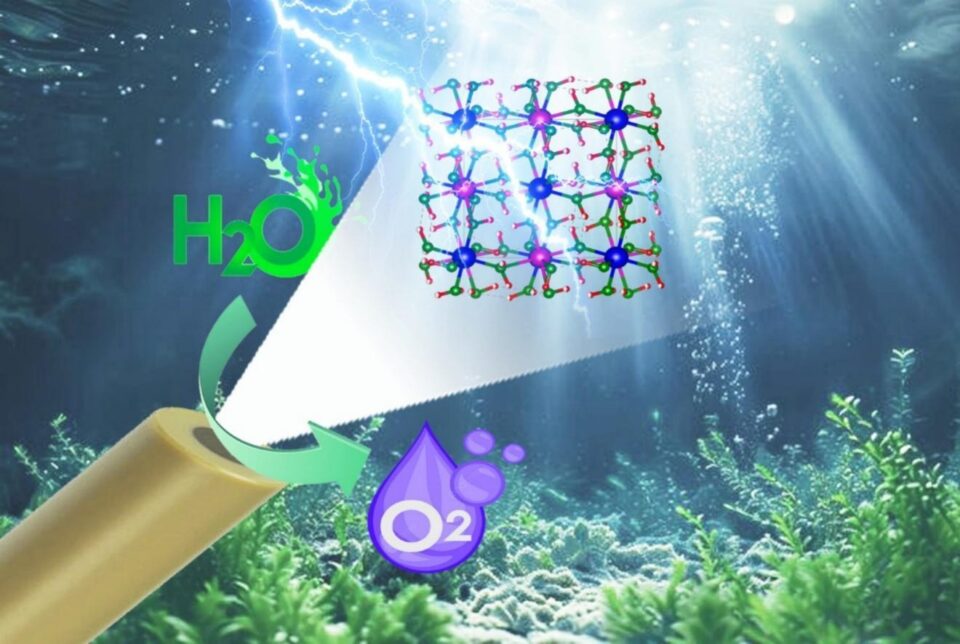
Abstract: MnSn(OH)6 nanocubes were synthesized via a hydrothermal method under varying NaOH concentrations to study the effect of alkalinity on structure, surface chemistry, and OER activity. SEM and TEM revealed that higher NaOH promotes particle aggregation and structural interconnection, with the 3 M sample showing compact morphology, higher crystallinity, and uniform elemental distribution. XPS indicated modulation of the surface electronic structure, including lattice oxygen species and a low-binding-energy Sn component. Electrochemical studies showed that the 3 M sample achieved the best OER performance, with an overpotential of 290 mV at 10 mA cm−2 and a Tafel slope of 94 mV dec−1. EIS indicated reduced charge transfer resistance, and DFT calculations revealed an Mn d-band center at −0.569 eV, suggesting optimal adsorption of OER intermediates. NaOH tuning effectively enhances structure, electronics, and OER activity.
- Jirapha Pimoei, Mongkol Tipplook, Wathanyu Kao-ian, Teshima Katsuya, Tetsu Yonezawa,
Soorathep Kheawhom, Anongnat Somwangthanaroj
Bismuth-modified MgAl LDO/C as a chemical anchor and kinetic promoter for ultra-stable aqueous zinc-iodine batteries
Journal of Energy Storage, 171, 122935 (2026).【Elsevier】(IF = 9.8)
DOI: 10.1016/j.est.2026.122935 (Published (web) 3 June 2026)
【国際共同研究】
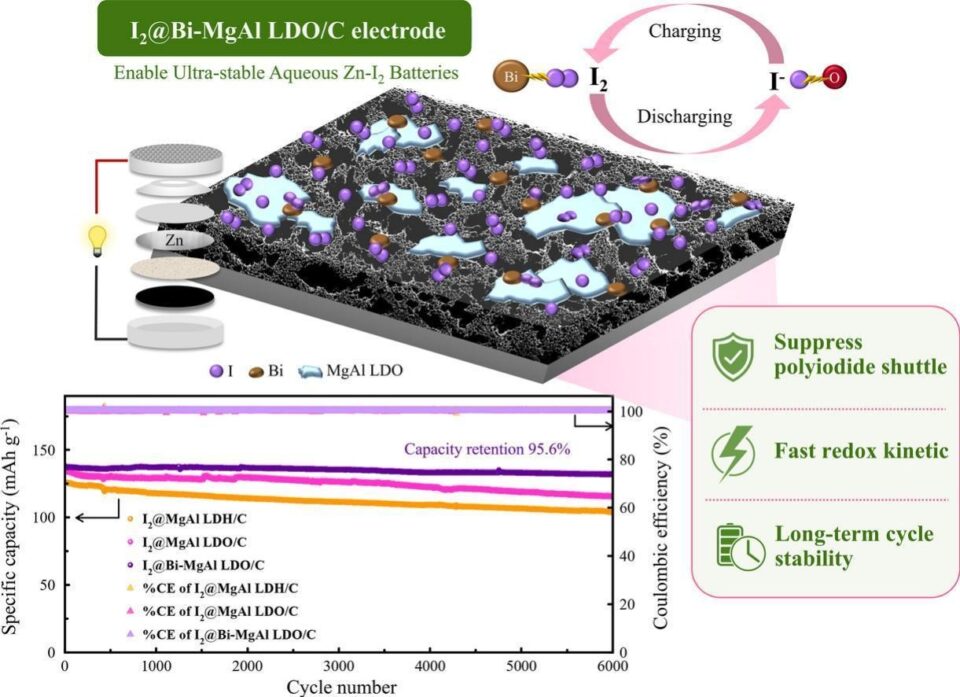
Abstract: Rechargeable zinc‑iodine batteries (ZIBs) are considered promising candidates for large-scale energy storage owing to their safety, low cost, and high theoretical capacity. Nevertheless, the sluggish redox kinetics and high solubility of iodine species hinder their practical application. Herein, we report the design of a Bi-MgAl LDO/C composite derived from a calcined MgAl layered double hydroxide/carbon (MgAl LDH/C) precursor modified with bismuth nitrate. The resulting material functions as an efficient cathode host, integrating a high-surface-area porous framework with strongly interactive Bi anchoring sites. Ex situ XPS analysis reveals the formation of Bi-I coordination during charging and iodine‑oxygen interactions during discharge, contributing to the immobilization of iodine species and suppression of the shuttle effect. As a result, the I2@Bi-MgAl LDO/C electrode delivers a high initial capacity of ∼138 mAh g−1 at 5C and retains 95.6% of its capacity over 6000 cycles, along with superior rate performance up to 20C. Moreover, reduced charge-transfer resistance and narrow redox potential gaps indicate enhanced redox reversibility and accelerated reaction kinetics. These findings highlight the potential role of Bi-induced chemical anchoring and kinetic promotion in stabilizing iodine species, positioning I2@Bi-MgAl LDO/C as a promising cathode host for high-performance aqueous ZIBs.
- Jaira Neibel Y. Bamba, Airon Rae C. Asuncion, DJ Donn C. Matienzo, Maricor F. Divinagracia-Luzadas, Anantharaj Sengeni, Hai Pham, Ayon Karmakar, Tetsu Yonezawa, Julie Anne d. R. Paraggua, Po-Ya Abel Chuang, Joey D. Ocon
Facile in-situ immobilization of self-healing catalyst films with enhanced oxygen evolution reaction
Journal of Alloys and Comounds, 1071, 188781 (2026).【Elsevier】(IF = 6.3)
DOI: 10.1016/j.jallcom.2026.188781(Published (web) 22 May 2026)
【国際共同研究】
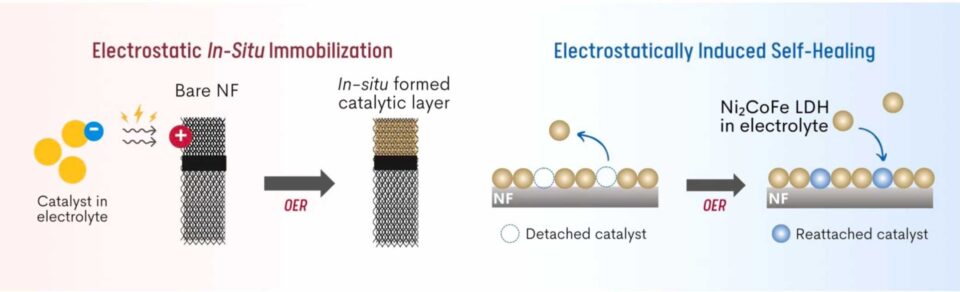
Abstract: Electrochemical water splitting under harsh conditions can lead to the degradation of oxygen evolution reaction (OER) catalysts, making self-healing properties advantageous. Despite advances in self-healing technologies, OER-specific self-healing catalysts remain scarce due to the stringent conditions required for effective regeneration. Layered double hydroxides (LDHs) are among the most promising OER catalysts, yet their design has largely focused on compositional optimization for activity, with limited understanding of how metal composition governs electrostatically driven immobilization, activation, and dynamic self-healing under operating conditions. Herein, the metal composition was fine-tuned, and Ni2CoFe LDH was identified as the most intrinsically active catalyst owing to its optimized surface properties, tailored electronic structure, and enhanced charge-transfer and reaction kinetics compared to other Ni/Co/Fe ratios. Under OER conditions, Ni2CoFe LDH exhibits in-situ film formation and dynamic self-healing via electrostatic immobilization on nickel foam, delivering low overpotentials of 243 and 292 mV at 10 and 100 mA cm–2, respectively, with a low Tafel slope of 41.6 mV dec–1. The in-situ formed catalyst demonstrates enhanced durability compared to NiFe LDH and NiCoFe LDH, sustained by continuous regeneration of active layers from dispersed LDH species in the electrolyte. High self-healing efficiency is maintained through repeated electrolyte-catalyst replenishment and electrochemical activation, promoting the formation of high-valent metal species and enabling stable operation for 120 h at 100 mA cm–2. Thus, this work provides insights into the design of low-cost yet durable electrocatalysts with industrial application potential for OER.
- Azmi Alvian Gabriel, Tetsu Yonezawa
Salt-stable ZnO Nanoparticles Stabilized by Citric-acid-crosslinked Canna edulis ker. Starch
International Journal of Biological Macromolecules, 363, 152130 (2026).【Elsevier】(IF = 8.5)
DOI: 10.1016/j.ijbiomac.2026.152130(Published (web) 22 April 2026)
【研究室内研究】
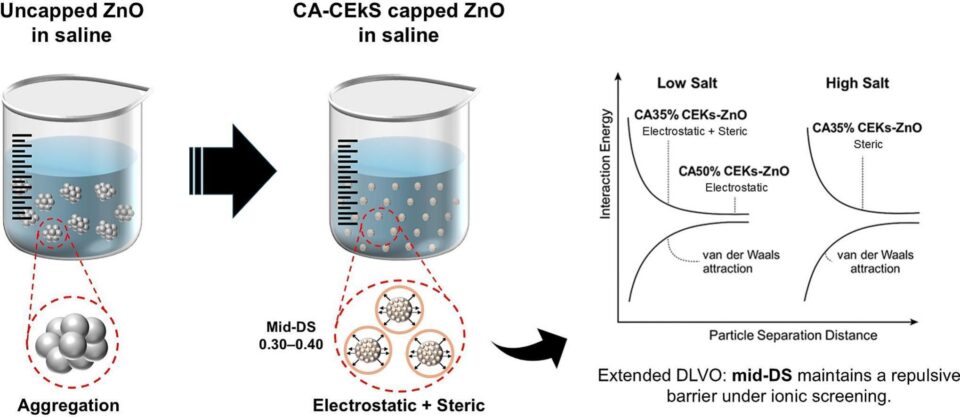 Abstract: This study examines how citric acid crosslinking density in Canna edulis ker. starch (CEkS) governs electrosteric stabilization of ZnO nanoparticles under saline stress. Citric acid–modified CEkS polymers spanning degrees of substitution (DS = 0.26–0.67) were synthesized and used to cap ZnO nanoparticles via aqueous co-precipitation. FTIR and XRD confirmed ester formation and ZnO crystallinity, while thermal analysis indicated enhanced thermal resilience of the crosslinked polymer–ZnO system. Colloidal stability was quantified by hydrodynamic diameter (DLS), zeta potential, and UV–Vis turbidity during storage across 0–200 mM NaCl. An intermediate-crosslinked formulation (CA35%) provided the most robust salt tolerance: at 200 mM NaCl, CA35% reached 1271 ± 5 nm after 7 days, whereas the non–modified CEkS control grew to 2633 ± 18 nm. In salt-free dispersions, CA35% remained 301 ± 2 nm at 7 days, while the control reached 2896 ± 6 nm. Higher-crosslinked samples formed stiffer shells that were less tolerant to ionic compression, accelerating aggregation despite more negative surface charge. Overall, the results establish a practical crosslinking–stability design rule for polysaccharide-capped ZnO nanocolloids in ionic media and provide a foundation for subsequent, application-specific validation where safety or regulatory testing is required.
- Po-Keng, Hsiao, Yen-Lun Kung, Yun-Pei Liu, Shihwen Tseng, Tetsu Yonezawa, Chun-Hu Chen, Ying-Chih Pu
Universal Interfacial Engineering via Amorphous Inorganic Binders: Passivating Surface States and Accelerating Hole Transfer across Metal Oxide Photoanodes in Photoelectrochemical Water Oxidation
The Journal of Physical Chemistry Letters, 17(17), 5139-5147 (2026).【ACS】(IF = 4.7)
DOI: 10.1021/acs.jpclett.6c00767 (Published (web) 17 April 2026)
【国際共同研究】
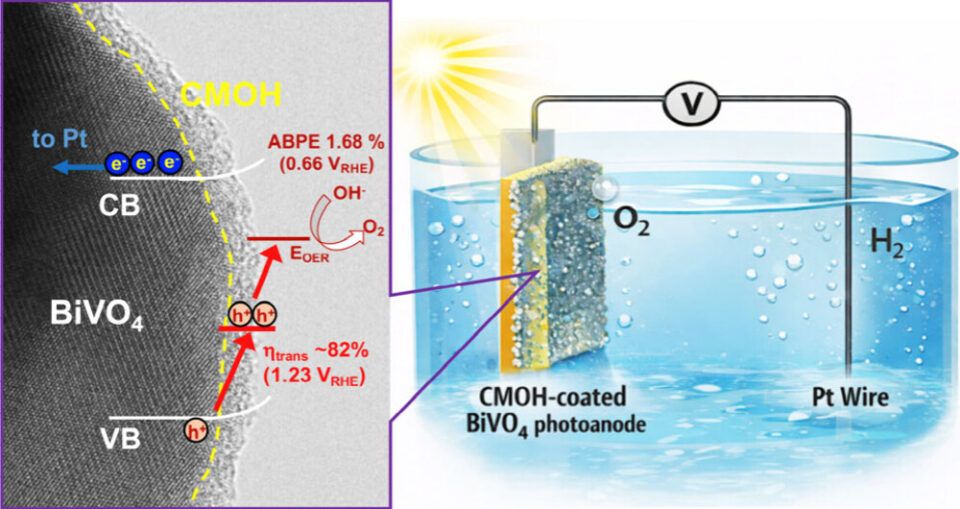
Abstract: Interfacial engineering of photoanodes is essential for efficient solar water splitting; however, many existing strategies rely on complex, multistep processes or hydrothermal growth, limiting scalability and reproducibility. Here, we present a universal interfacial engineering platform based on a sub-2 min acidic redox-assisted deposition (ARD) of an amorphous inorganic binder, cobalt–manganese oxyhydroxide (CMOH). Using two-step-fabricated BiVO4 as a literature-standard benchmark, we demonstrate that an ultrathin CMOH overlayer markedly enhances photoelectrochemical (PEC) water oxidation performance. The conformal CMOH coating (∼3.5 nm) is deposited under ambient conditions via a simple dip-coating process and is broadly applicable to metal oxide photoanodes, including BiVO4, WO3, and ZnO. The CMOH-modified BiVO4 photoanode delivers a high photocurrent density of ∼6.0 mA cm–2 and a hole-transfer efficiency of ∼82% at 1.23 VRHE, together with a remarkable applied bias photon-to-current efficiency (ABPE) of 1.68% at 0.66 VRHE. These enhancements originate from effective surface-state passivation by the CMOH overlayer, leading to over a 4-fold reduction in the surface recombination rate constant, as revealed by intensity-modulated photocurrent spectroscopy (IMPS). In addition, the reduced Tafel slope (78.5 mV dec–1) suggests that the CMOH layer promotes interfacial charge transfer and enhances the water oxidation kinetics of the BiVO4 photoanode. This work elucidates the critical role of amorphous CMOH oxygen evolution catalysts in mediating photoinduced charge-carrier dynamics and establishes a facile and scalable strategy to broadly enhance the PEC performance of metal oxide photoanodes for large-scale solar fuel production.
- Tetsu Yonezawa, Qianhao Zuo
Copper Particle Sintering for Low-Temperature Electronic Joining: A Review of Materials Design and Processing Strategies【Review】
Advanced Engineering Materials, 28(13), e202502392 (2026).【Wiley】(IF = 3.3)
DOI: 10.1002/adem.202502392(Published (web) 28 April 2026)
【研究室内研究】
Abstract: Low-temperature copper (Cu) sinter-bonding has emerged as a promising alternative for conductive layers in electronic parts and die-attachment in power electronics packaging, particularly for packaging wide-bandgap (WBG) semiconductors such as silicon carbide (SiC) and gallium nitride (GaN). WBG devices operate at higher temperatures and require bonding materials with superior thermal and mechanical properties. Compared to conventional soldering techniques, Cu sinter-bonding offers enhanced electrical and thermal conductivity, better resistance to electrochemical migration, and lower material costs. However, challenges such as the oxidation of Cu particles, achieving optimal densification, and controlling processing conditions must be addressed for its widespread application. In this review, the mechanisms of Cu sinter‐bonding, key sintering parameters, and recent advances in Cu paste formulations, including surface modification, hybrid particle systems, and alloying with additional metals, are summarized. Optimization strategies for pressure, temperature, solvent, atmosphere, and substrate metallization to improve the performance of Cu joints are discussed in detail. The potential of Cu sinter-bonding in next-generation electronic packaging is analyzed, along with challenges and future research directions.
- Phonnapha Tangthuam, Vipada Aupama, Manaswee Suttipong, Tae-Kyu An, Insik In, Tetsu Yonezawa, Dowon Bae, Li-Hsien Yeh, Soorathep Kheawhom
From Molecule to Stack: A Cross-Scale Design Framework for Aqueous Organic Redox Flow Batteries【Review】
Batteries and Supercaps, 9(5), e70301 (2026). 【Wiley】(IF = 4.7)DOI: 10.1002/batt.70301 (Published (web) 21 April 2026)【国際共同研究】
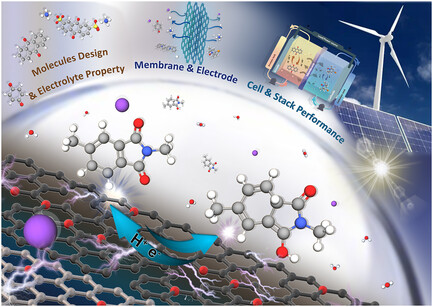
Abstract: Aqueous organic redox flow batteries (AORFBs) have emerged as promising candidates for long-duration grid-scale energy storage due to their decoupled power-energy architecture and the tunability of organic redox-active molecules. Rapid progress across molecular design, membranes, electrodes, and system engineering has produced a diverse but largely compartmentalized body of literature, in which structure-property relationships are often analyzed in isolation. In this review, we present a cross-scale design framework that connects molecular descriptors to interfacial processes and, ultimately, to device-level performance constraints. We compare major classes of organic redox-active molecules, including quinones, viologens, phenazines, nitroxide radicals, and imides, and examine how substituent engineering governs redox potential, solubility, stability, and viscosity. These molecular characteristics are then linked to electrolyte transport, membrane selectivity, and electrode kinetics, highlighting how coupled phenomena such as crossover, aggregation, and viscosity-mass transfer limitations emerge under practical operating conditions. Building on this framework, we analyze how membrane swelling, charge-state-dependent partitioning, and electrode-molecule interactions jointly determine efficiency, lifetime, and degradation pathways. We further discuss system-level constraints arising from concentration-dependent viscosity, mass transport limitations, and crossover-driven state-of-charge imbalance. Finally, we propose deployment-relevant benchmarking metrics and reporting practices and outline key directions for advancing molecular stability, selective membranes, and viscosity-aware system design.
- Amogelang G. Metseeme, Thabakgolo T. Letsau, Shidong Song, Tetsu Yonezawa, Phumlani F. Msomi
Anion exchange membranes for electrically rechargeable zinc–air batteries: Structure-transport-degradation relationships and design strategies【Review】
Next Materials, 12, 102025 (2026). 【Elsevier】【Open Access】
DOI: 10.1016/j.nxmate.2026.102025 (Published (web) 7 April 2026)
【国際共同研究】
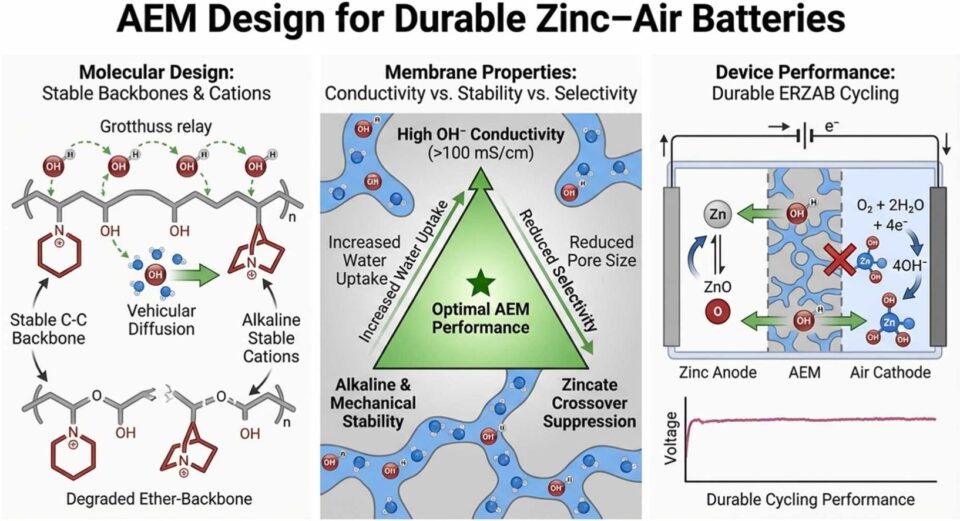
Abstract: Electrically rechargeable zinc–air batteries (ERZABs) are promising for grid and mobility energy storage due to zinc’s abundance, high theoretical capacity, and relatively benign chemistry. A critical component governing their performance is the anion exchange membrane (AEM), which must efficiently conduct hydroxide ions while suppressing zincate crossover and maintaining stability in strongly alkaline environments. This review examines how polymer structure, cation chemistry, water management, and microphase morphology collectively influence hydroxide transport and long-term durability. Particular attention is given to the interplay between ion exchange capacity, water uptake, conductivity, and dimensional stability, as well as the role of membrane microstructure in controlling multivalent ion transport. Advances in membrane fabrication strategies, including crosslinking, blending, pore-filling, and electrospinning, are evaluated in terms of their impact on transport and mechanical integrity. Recent developments in ether-free polyaromatic backbones and sterically protected cations have enabled hydroxide conductivities exceeding 100 mS cm⁻¹ at elevated temperatures with improved alkaline stability. However, many reported values are obtained under fully hydrated conditions and may not directly reflect ERZAB operation, where carbonation, hydration gradients, and cycling stresses influence performance. By linking polymer design to ion transport, degradation behavior, and device-level constraints, this review provides a structured perspective on AEM development and identifies key considerations for achieving durable and efficient ERZAB systems.
- Yi Zheng, Hiroki Tsukamoto, Tetsu Yonezawa
Low‑Temperature Sintering Copper Inks: In- Situ X‑Ray Diffraction of Decomposition, Enhanced Conductivity and Morphology, and Nickel‑Improved Weather Resistance
ChemNanoMat, 12(4), e202500768 (2026).【Wiley】(IF = 2.6)
DOI: 10.1002/cnma.202500768(Published(web)17 April 2026)
【研究室内研究】
Abstract: We present a metal–organic decomposition (MOD) copper ink based on copper formate and 1-amino-2-propanol (MIPA), with octylamine (OA) as a printability modifier and nickel formate as an antioxidation additive. X-ray diffraction (XRD) indicates complex formation and storage stability at low temperature, while Fourier-transform infrared (FT-IR) confirms coordination of MIPA to CuF. Thermogravimetric–differential thermal analysis (TG–DTA) shows that the CuF/MIPA/OA complex lowers the decomposition temperature from 215°C (CuF) to ∼130°C; in-situ XRD detects metallic Cu even at ∼120°C. Copper films sintered on alumina under nitrogen exhibit decreasing resistivity with increasing temperature below 200°C, reaching 2.86 × 10⁻⁵ Ω·cm at 180°C for a CuF:MIPA:OA molar ratio of 1:1.3:0.8. Scanning electron microscope (SEM) reveals progressive densification with temperature. Incorporating NiF (5–10 wt%) increases the initial resistivity but markedly improves weather resistance over 35 days. These results establish a coherent low-temperature route to copper metallization and elucidate how complex chemistry and Ni addition govern conductivity and durability.